- Business
- Esoteric
- Fitness & Gym
- Health
- Hypnosis
- Management
- Marketing & Selling
- Massage – SPA
- Parenting
- PUA Seduction
- Science
- Self Improvement
- Art
- Investing
- Painting & Sculpting
- Tai Chi & Martial Arts
- Qigong
- Taoism
- Design & Graphics
- Medicine
- Exams
- Spirituality & Religion
- Hobbies & Fixing & Woodworking
- Photography & Film Making
- Networking & Lan
- Forex & Trading
- IQ & Memory
- Vision & Eye Care
- Swimming & Scuba diving & Water Sports
- Security & Hacking
- Travel
- Cooking
- Driving & Flighting
- Languages
- Computers & Programming
- Building & Home Improvement
- Music
- Astronomy
- History
- Mathematics
- Philosophy
- Literature & Writing
- Economics & Finance
- Sewing
- Hunting
- Electronics
- Psychology & Psychiatry
-75%

Domestika - Filming for Beginners
Original price was: $20.00.$5.00Current price is: $5.00.

Epic Network - Quick Cash Consulting
Original price was: $100.00.$10.00Current price is: $10.00.
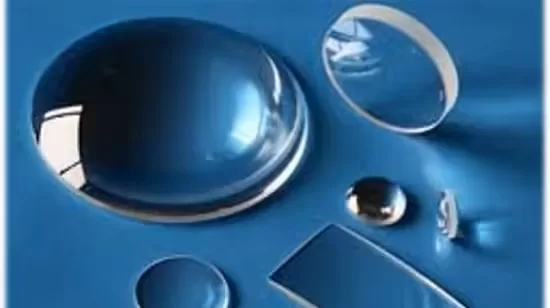
EdQuantum Series – Course 2: PRINCIPLES OF CLASSICAL OPTICS
Original price was: $20.00.$5.00Current price is: $5.00.
Description
Published 10/2025
MP4 | Video: h264, 1280×720 | Audio: AAC, 44.1 KHz, 2 Ch
Language: English | Duration: 5h 20m | Size: 4.16 GB
Prisms, mirrors, and lenses. Image formation through mirrors and lenses. Interference and diffraction. Law of Malus
What you’ll learn
Explain propagation of light rays through a telescope, a camera, and a pair of binoculars.
Determine location, size, orientation, and nature of images formed with spherical mirrors and lenses using mathematical equations.
Calculate the thickness of a human hair using the concept of diffraction.
Describe how polarizers and the Law of Malus are used to control light intensity.
Implement various optical alignment techniques, including the collimation of a diverging laser beam.
Requirements
Knowledge of high school physics is preferred but not required.
Taking EdQuantum Course 1 before this course is recommended.
Description
This course offers a comprehensive introduction to the fundamental principles of classical optics by examining the behavior of light through two complementary models: rays and waves. It is specifically designed for participants in diverse technical and scientific fields such as electronics, instrumentation, telecommunications, and biomedical technology, providing essential knowledge to support their professional work and research. The course begins with the basics of geometrical optics, where light is conceptualized as rays that undergo reflection and refraction at various surfaces. Early topics cover foundational laws such as the laws of reflection and refraction, along with practical ray-tracing techniques that enable learners to analyze and predict the paths of light. Emphasis is placed on image formation using optical elements including plane mirrors, spherical mirrors, lenses, and prisms. Through carefully structured exercises, participants will apply these principles to solve problems involving mirror equations, lens systems, and gain insight into the operational foundations of key optical instruments like telescopes and microscopes. In the second half of the course, the focus shifts to physical optics, which models light as a wave phenomenon. Learners explore complex wave interactions such as interference, diffraction, and polarization, deepening their understanding of how light waves combine, spread, and change orientation under various conditions. This section features classic experiments and real-world applications, including Young’s double-slit experiment, thin-film interference effects, diffraction gratings, and the significance of Brewster’s angle in polarization by reflection. To reinforce theoretical knowledge and support experiential learning, the course integrates virtual demonstrations of classical optics experiments. These interactive, simulated lab experiences enable participants to visualize optical phenomena in real time and engage actively with the material, facilitating deeper comprehension and practical application of the concepts covered.
Who this course is for
Individuals with no prerequisite knowledge who want to learn more about optics and quantum: technicians, high schoolers, non-technical and technical business professionals, and other individuals curious about this technology.
Homepage
https://www.udemy.com/course/edquantum-series-course-2-principles-of-classical-optics/
Shipping & Delivery
DIGITAL DELIVERY ONLY
This is digital product THE DOWNLOAD LINK SEND 12-24 HOURS AFTER UPON PURSUASE AND PAYMENT CLEARS"
- The digital files are uploaded on PCLOUD
- 12-24 hours delivery time
- the download links expire after 7 days and need to download them
- to renew the download link after expiration have one additional fee $5 per product
REQUESTS
Also we accept requests and course exchanges
In Course exchanges we are sending credits only
The credits will be the same price as we can sell course
"REFUNDS & RETURNS"
No Refunds on digital product
ONLY EXCHANGE
- Because of the abuse of the refunds from many customers i don't accept refunds
- We accept only 1 time exchange with product of the same price
- if you done mistake on the exchangeable product i don't recognize it as your mistake
- Exchanges only 3 days after the payment of your digital product. (if abused again i will do it 1 day)


