- Business
- Esoteric
- Fitness & Gym
- Health
- Hypnosis
- Management
- Marketing & Selling
- Massage – SPA
- Parenting
- PUA Seduction
- Science
- Self Improvement
- Art
- Investing
- Painting & Sculpting
- Tai Chi & Martial Arts
- Qigong
- Taoism
- Design & Graphics
- Medicine
- Exams
- Spirituality & Religion
- Hobbies & Fixing & Woodworking
- Photography & Film Making
- Networking & Lan
- Forex & Trading
- IQ & Memory
- Vision & Eye Care
- Swimming & Scuba diving & Water Sports
- Security & Hacking
- Travel
- Cooking
- Driving & Flighting
- Languages
- Computers & Programming
- Building & Home Improvement
- Music
- Astronomy
- History
- Mathematics
- Philosophy
- Literature & Writing
- Economics & Finance
- Sewing
- Hunting
- Electronics
- Psychology & Psychiatry
-75%

Lymphatic hands-on Techniques in Osteopathy
Original price was: $20.00.$5.00Current price is: $5.00.

MCP Development: Build AI Integrations with Vibe Coding
Original price was: $20.00.$5.00Current price is: $5.00.
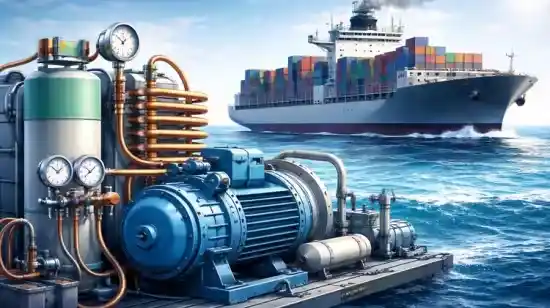
Marine HVAC for Beginners
Original price was: $20.00.$5.00Current price is: $5.00.
Description
Published 3/2026
MP4 | Video: h264, 1280×720 | Audio: AAC, 44.1 KHz, 2 Ch
Language: English | Duration: 1h 30m | Size: 688.34 MB
A Step-by-Step Introduction to Marine Refrigeration and Air Conditioning
What you’ll learn
Understand the fundamental principles of refrigeration and air-conditioning systems used in marine engineering applications.
Identify and explain the main components of a vapor-compression refrigeration cycle, including compressors, condensers, expansion devices, and evaporators.
Interpret refrigeration system diagrams and thermodynamic charts, such as the Pressure–Enthalpy (P-h) diagram, to analyze system performance.
Describe the operation and working cycle of marine refrigeration and HVAC systems used on board ships.
Recognize common operational characteristics and practical applications of refrigeration systems in marine environments.
Develop a foundational understanding necessary for further study or professional work in marine HVAC and refrigeration engineering.
Requirements
This course is designed for beginners and does not require advanced prior knowledge. However, learners will benefit from the following: Basic understanding of general engineering or technical concepts is helpful but not mandatory. Interest in marine engineering, refrigeration, or air-conditioning systems, especially for those planning to work in the maritime industry. Basic knowledge of physics fundamentals, particularly concepts related to pressure, temperature, and heat transfer. A computer, tablet, or smartphone with internet access to watch the course lectures and review the learning materials. Willingness to learn technical concepts and apply them to real marine engineering applications. No previous experience in marine refrigeration or HVAC systems is required. The course starts from the fundamental principles and gradually progresses to practical system understanding.
Description
“This course contains the use of artificial intelligence.”
Refrigeration and air-conditioning systems play a vital role in modern ships, ensuring proper preservation of food supplies, maintaining safe working environments, and supporting various technical operations on board. A solid understanding of these systems is therefore essential for marine engineers, maritime students, and anyone interested in shipboard engineering systems.
This course provides a clear and structured introduction to marine refrigeration and air-conditioning systems, designed specifically for beginners who want to understand the fundamental principles and practical operation of these systems in marine environments. The course explains the basic concepts in a simple yet professional engineering approach, allowing learners to gradually build a strong technical foundation.
Throughout this course, learners will explore the fundamental thermodynamic principles of refrigeration, including the vapor-compression refrigeration cycle and its main components such as compressors, condensers, evaporators, and expansion devices. The course also explains how these components work together to create an efficient refrigeration system used on board ships.
In addition, the course introduces learners to important engineering diagrams and charts, such as the Pressure–Enthalpy (P-h) diagram, which is widely used to analyze and understand refrigeration system performance. Practical explanations are provided to help learners interpret these diagrams and relate them to real marine engineering applications.
The lectures are presented in a clear, step-by-step teaching style, making complex engineering concepts easier to understand. The course focuses not only on theoretical knowledge but also on the practical understanding required by marine engineering students and junior engineers.
By the end of this course, learners will have a solid foundational understanding of marine refrigeration and air-conditioning systems, preparing them for more advanced studies in marine HVAC engineering or for practical work in the maritime industry.
Whether you are a marine engineering student, maritime cadet, technician, or engineering enthusiast, this course will provide you with the essential knowledge needed to understand one of the most important auxiliary systems on board modern ships.
Who this course is for
This course is designed for learners who want to build a strong foundation in marine refrigeration and air-conditioning systems. It is especially valuable for: Marine engineering students who want to understand the fundamentals of refrigeration and HVAC systems used on board ships. Cadets and trainees in maritime academies preparing for careers as marine engineers or technical officers. Junior marine engineers and ship engine room personnel who want to strengthen their theoretical and practical understanding of refrigeration systems. Mechanical engineering students and technicians interested in refrigeration and air-conditioning technology, particularly in marine applications. Anyone interested in learning the basic principles of refrigeration cycles and HVAC systems in a clear and structured engineering approach. No previous experience in marine refrigeration is required, making this course suitable for beginners who
Homepage
https://www.udemy.com/course/marine-hvac-for-beginners
Shipping & Delivery
DIGITAL DELIVERY ONLY
This is digital product THE DOWNLOAD LINK SEND 12-24 HOURS AFTER UPON PURSUASE AND PAYMENT CLEARS"
- The digital files are uploaded on PCLOUD
- 12-24 hours delivery time
- the download links expire after 7 days and need to download them
- to renew the download link after expiration have one additional fee $5 per product
REQUESTS
Also we accept requests and course exchanges
In Course exchanges we are sending credits only
The credits will be the same price as we can sell course
"REFUNDS & RETURNS"
No Refunds on digital product
ONLY EXCHANGE
- Because of the abuse of the refunds from many customers i don't accept refunds
- We accept only 1 time exchange with product of the same price
- if you done mistake on the exchangeable product i don't recognize it as your mistake
- Exchanges only 3 days after the payment of your digital product. (if abused again i will do it 1 day)


