- Business
- Esoteric
- Fitness & Gym
- Health
- Hypnosis
- Management
- Marketing & Selling
- Massage – SPA
- Parenting
- PUA Seduction
- Science
- Self Improvement
- Art
- Investing
- Painting & Sculpting
- Tai Chi & Martial Arts
- Qigong
- Taoism
- Design & Graphics
- Medicine
- Exams
- Spirituality & Religion
- Hobbies & Fixing & Woodworking
- Photography & Film Making
- Networking & Lan
- Forex & Trading
- IQ & Memory
- Vision & Eye Care
- Swimming & Scuba diving & Water Sports
- Security & Hacking
- Travel
- Cooking
- Driving & Flighting
- Languages
- Computers & Programming
- Building & Home Improvement
- Music
- Astronomy
- History
- Mathematics
- Philosophy
- Literature & Writing
- Economics & Finance
- Sewing
- Hunting
- Electronics
- Psychology & Psychiatry
-75%

Machine Learning With Python - Complete Course & Projects
Original price was: $20.00.$5.00Current price is: $5.00.

Microsoft Outlook Copilot 365 with Microsoft Copilot
Original price was: $20.00.$5.00Current price is: $5.00.
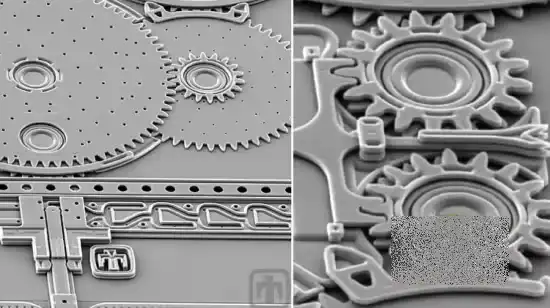
Microelectromechanical Systems II: Design Principles
Original price was: $20.00.$5.00Current price is: $5.00.
Description
Published 1/2026
Created by Pedro Portugal
MP4 | Video: h264, 1920×1080 | Audio: AAC, 44.1 KHz, 2 Ch
Level: Intermediate | Genre: eLearning | Language: English | Duration: 24 Lectures ( 4h 10m ) | Size: 2 GB
MEMS Devices; Modeling, and Design Principles
What you’ll learn
✓ Construct lumped-element models to simplify complex multi-domain physics into equivalent mechanical mass-spring-damper systems.
✓ Evaluate the trade-offs in capacitive sensing between sensitivity and linearity while accounting for the physical constraints of pull-in instability.
✓ Understand the frequency response and Q-factor of resonant micro-structures to optimize energy dissipation and frequency stability.
✓ Analyze mechanical failure modes such as buckling and fatigue driven by cyclic thermal stress and Joule heating within micro-structures.
Requirements
● B.S or graduate students, Mechanical engineering, Manufacturing Engineering, Aerospace Engineering, Electronics Engineering, Physics, Technicians with industry experience.
Description
This course transitions from fundamental physical principles to the systematic modeling and design of functional Microelectromechanical Systems (MEMS). Divided into five sections, it provides the analytical tools necessary to transform theoretical micro-physics into high-performance sensors and actuators used in global industry.
The first section introduces the methodology of Lumped-Element Modeling, teaching students how to simplify complex multiphysics systems into equivalent mass-spring-damper circuits. This module establishes the groundwork for analyzing both static and dynamic MEMS behavior, with a focus on predicting frequency response and the importance of mechanical resonance.
The second section focuses on Electrostatic MEMS Devices, the most common architecture in the field. Students will explore the principles of capacitive sensing and the trade-offs between sensitivity and linearity. Critical design constraints are examined, specifically the “pull-in” instability limit and the various noise sources that impact the resolution of capacitive micro-sensors.
The third section explores Resonant MEMS, detailing how micro-structures are engineered for timing and frequency control. Topics include the analysis of mode shapes, lateral resonators, and the “Quality Factor” (Q-factor). Students will learn how to manage damping and energy loss mechanisms to ensure frequency stability and minimize drift in precision applications.
The fourth section dives into Inertial MEMS Devices, specifically accelerometers and gyroscopes. This module provides a rigorous explanation of the Coriolis effect and how it is harnessed for angular rate sensing. Students will analyze mechanical design trade-offs, focusing on how bias, noise, and temperature effects influence the performance of navigation-grade inertial units.
The final section addresses Thermal and Specialty MEMS, alongside material selection and reliability. This module covers the use of Joule heating as a deliberate design tool and identifies common failure modes such as thermal buckling and fatigue. Students will learn to navigate design pitfalls to ensure the long-term reliability of micro-systems in harsh environments.
By the end of this course, students will be able to translate physical requirements into mathematical models and engineering designs. Through the study of inertial and resonant systems, they will gain the expertise to design the “brain and senses” of modern autonomous systems, wearables, and aerospace technology.
Who this course is for
■ Engineers, senior or grad students. Entrepreneurs and Innovators, designers, manufacturing professionals (with our without a college degree). Overall, Professionals Seeking Career Growth
Homepage
https://anonymz.com/?https://www.udemy.com/course/microelectromechanical-systems-2-design-principles/
Shipping & Delivery
DIGITAL DELIVERY ONLY
This is digital product THE DOWNLOAD LINK SEND 12-24 HOURS AFTER UPON PURSUASE AND PAYMENT CLEARS"
- The digital files are uploaded on PCLOUD
- 12-24 hours delivery time
- the download links expire after 7 days and need to download them
- to renew the download link after expiration have one additional fee $5 per product
REQUESTS
Also we accept requests and course exchanges
In Course exchanges we are sending credits only
The credits will be the same price as we can sell course
"REFUNDS & RETURNS"
No Refunds on digital product
ONLY EXCHANGE
- Because of the abuse of the refunds from many customers i don't accept refunds
- We accept only 1 time exchange with product of the same price
- if you done mistake on the exchangeable product i don't recognize it as your mistake
- Exchanges only 3 days after the payment of your digital product. (if abused again i will do it 1 day)


