- Business
- Esoteric
- Fitness & Gym
- Health
- Hypnosis
- Management
- Marketing & Selling
- Massage – SPA
- Parenting
- PUA Seduction
- Science
- Self Improvement
- Art
- Investing
- Painting & Sculpting
- Tai Chi & Martial Arts
- Qigong
- Taoism
- Design & Graphics
- Medicine
- Exams
- Spirituality & Religion
- Hobbies & Fixing & Woodworking
- Photography & Film Making
- Networking & Lan
- Forex & Trading
- IQ & Memory
- Vision & Eye Care
- Swimming & Scuba diving & Water Sports
- Security & Hacking
- Travel
- Cooking
- Driving & Flighting
- Languages
- Computers & Programming
- Building & Home Improvement
- Music
- Astronomy
- History
- Mathematics
- Philosophy
- Literature & Writing
- Economics & Finance
- Sewing
- Hunting
- Electronics
- Psychology & Psychiatry
-75%

The Art of Sleep EEG: Scoring and Data Analysis with Python
Original price was: $20.00.$5.00Current price is: $5.00.

Unity 2D Platformer Course: Build Your First Game from zero
Original price was: $20.00.$5.00Current price is: $5.00.
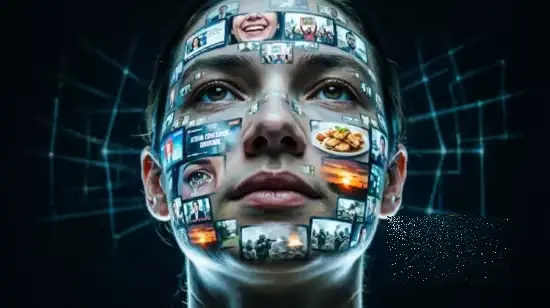
The Machine That Wears Your Face
Original price was: $20.00.$5.00Current price is: $5.00.
Description
Published 3/2026
Created by Maurizio Bisogno
MP4 | Video: h264, 1280×720 | Audio: AAC, 44.1 KHz, 2 Ch
Level: Beginner | Genre: eLearning | Language: English | Duration: 6 Lectures ( 1h 26m ) | Size: 1.59 GB
The structural analysis of the contemporary culture industry
What you’ll learn
✓ Identify how recommendation algorithms produce conformity through the appearance of personalisation — and why this is ideologically effective.
✓ Analyse the political consequences of engagement-optimised feeds, including the structural amplification of certainty, the erosion of shared factual ground.
✓ Recognise how authentic subcultural and political movements are systematically captured, commodified, and reintroduced as aesthetic products.
✓ Understand the economic structure of platform labour: how users simultaneously produce content, generate behavioural data, and build network value for platforms
✓ Apply the concept of the culture industry — originally developed by Adorno and Horkheimer in 1944 — to the contemporary algorithmic environment.
✓ Distinguish between individual behavioural adjustment and genuine structural resistance —
✓ Practise three philosophically grounded orientations — illegibility, presence to the real, and sustained responsibility — as alternatives to unreflectiveness
✓ Evaluate your own relationship to platforms, communities, and political convictions with greater critical honesty —
Requirements
● 1. No prior knowledge of philosophy, media theory, or critical thinking is required. If you have ever felt vaguely uneasy about your relationship with your phone, you already have everything you need to begin. 2. An open mind and a willingness to sit with uncomfortable questions. Some of what this course argues will challenge things you currently take for granted about your own choices, your political convictions, and your sense of who you are. That discomfort is not a side effect — it is the course working as intended. 3. Approximately one hour of uninterrupted time. This course is designed to be watched in a single sitting if possible — the argument builds across five videos and lands harder when experienced as a continuous whole rather than in isolated fragments. 4. No software, tools, or equipment required. No textbooks to purchase. All key concepts are introduced and explained within the course itself. A PDF reading guide accompanies each video for those who wish to go deeper — but following up on the suggested readings is entirely optional. Optional but useful: A notebook. Not for taking notes in the conventional sense — but because several of the reflection questions at the end of each video are worth writing answers to rather than simply thinking about. Writing slows the mind down in ways that are particularly valuable for this kind of material. A direct word to the hesitant student — and this is the one sentence I would most recommend including, because it will convert browsers into enrolments: If you have never studied philosophy before and the names Adorno, Deleuze, or Marx make you nervous — this course was written specifically for you. The ideas are rigorous. The language is not.
Description
The Machine That Wears Your Face
Something has changed. Not in the world out there — in the texture of daily experience. In the way an hour disappears without your choosing it. In the way your political convictions have grown more certain while your understanding of those who disagree has grown more thin. In the way you reach for your phone not because you want something specific but because the absence of stimulation has begun to feel like a problem to be solved.
You have noticed this. Most people have. What most people have not found is an adequate explanation for it — one that goes deeper than screen time statistics and social media addiction narratives, one that takes seriously the structural sophistication of what has been built around you.
This section provides that explanation.
Across four videos, we begin with a philosopher who in 1944 diagnosed a condition he called the culture industry — the system through which mass entertainment trains people to accept the world as it is, while making that training feel like the exercise of personal freedom. Theodor Adorno could not have imagined a smartphone. And yet his analysis describes your feed with an accuracy that should unsettle you. We begin there because understanding what the system was is the precondition for understanding what it has become.
What it has become is something qualitatively different and considerably more sophisticated. Where the mid-twentieth century culture industry imposed the same content on a passive mass, the algorithmic system produces a different reality for every single user — one calibrated with extraordinary precision to match your emotional topography, amplify your existing preferences toward their most intense version, and make the resulting experience feel not like administration but like self-knowledge. The cage has not disappeared. It has learned to feel like a mirror.
We then look at what the system has done to the margins — to the subcultural spaces that once produced genuine alternatives to mainstream culture. The gap between authentic cultural production and commercial capture, which once lasted decades, has been compressed to weeks. The system no longer waits for resistance to develop and then suppresses it. It identifies emerging authenticity early, amplifies it to commercial viability, extracts the aesthetic, strips out the critique, and sells the remainder at scale. The result is an endless succession of micro-aesthetics that carry the visual signature of difference without the substance of it.
And finally, we look at the economic foundation beneath all of this — the fact that you are not the customer of these platforms. You are the worker. Every post, every reaction, every hour of scrolling produces content, data, and network value that the platform captures entirely. You are compensated in attention, in the neurochemical reward of engagement, in the feeling of connection. They are compensated in revenue streams that exceed the GDP of most countries. This is not a metaphor. It is the most elegant labour arrangement in the history of capitalism — and it works precisely because it has convinced its workforce that they are not working.
By the end of Section 1, you will not simply know these things intellectually. You will be able to see them operating in real time — in your own feed, in your own political life, in your own experience of who you are and how you came to be that way. That seeing is not comfortable. It is not meant to be. It is, however, the necessary precondition for anything that comes after it.
The cage is invisible because it has been built inside your experience of freedom.
This section shows you where to look.
4 videos — approximately 50 minutes
Who this course is for
■ This course is for anyone intelligent enough to suspect that something is wrong with the way attention, desire, and identity work in the digital age — and serious enough to want more than a surface answer.
Homepage
https://anonymz.com/?https://www.udemy.com/course/the-machine-that-wears-your-face
Shipping & Delivery
DIGITAL DELIVERY ONLY
This is digital product THE DOWNLOAD LINK SEND 12-24 HOURS AFTER UPON PURSUASE AND PAYMENT CLEARS"
- The digital files are uploaded on PCLOUD
- 12-24 hours delivery time
- the download links expire after 7 days and need to download them
- to renew the download link after expiration have one additional fee $5 per product
REQUESTS
Also we accept requests and course exchanges
In Course exchanges we are sending credits only
The credits will be the same price as we can sell course
"REFUNDS & RETURNS"
No Refunds on digital product
ONLY EXCHANGE
- Because of the abuse of the refunds from many customers i don't accept refunds
- We accept only 1 time exchange with product of the same price
- if you done mistake on the exchangeable product i don't recognize it as your mistake
- Exchanges only 3 days after the payment of your digital product. (if abused again i will do it 1 day)


